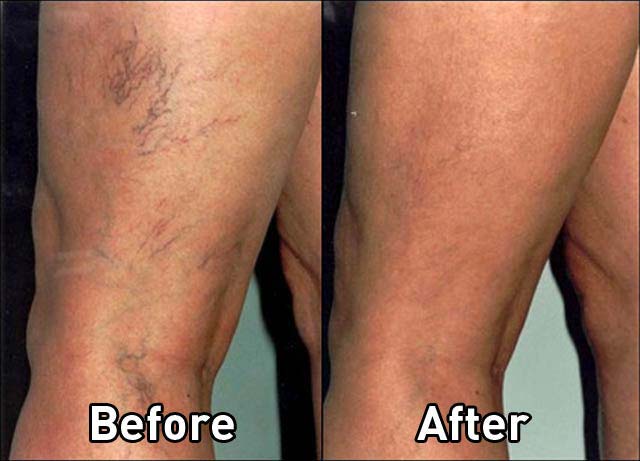
Spider Vein & Varicose Vein Sclerotherapy and Laser Treatments
Radiance MedSpa of Palm Beach treats a broad range of vessels from tiny spider veins to deep blue reticular veins quickly, safely, and effectively. Patients with dark, light or tanned skin can experience outstanding results without bruising or blistering.
Sclerotherapy and Spider Vein Treatment
80 million or more Americans, mostly women, suffer from embarrassing spider or varicose veins which they try to hide or buy clothes to cover. Varicose and Spider veins in Florida have nowhere to hide as the heat makes hiding them almost impossible. The bad news is that left untreated they will not go away and will get worse as time goes on. The good news is that simple and convenient procedures are available for the treatment of spider and varicose veins at New Radiance in Palm Beach Gardens Florida
If you want to banish or reduce spider veins, schedule a sclerotherapy consultation with the cosmetic vein experts at New Radiance in Palm Beach Gardens Florida.
Vein Treatment Injections
Sclerotherapy is the injection of solutions into the spider veins and varicose veins that irritate the blood vessels in order to cause their destruction is a proven treatment for spider veins. Blood flow then shifts to other healthy veins. New foam preparations make it possible for patients with large varicose veins to benefit from this minimally invasive procedure and avoid painful vein-stripping surgery.
Sclerotherapy eliminates spider and varicose veins from the inside out. Scarring and the need for general anesthesia are eliminated.
Laser Vein Treatment
Visible veins of the face and legs can now be treated with a variety of laser and light treatments, available at New Radiance of Palm Beach. A series of laser vein treatments can significantly reduce spider veins without the use of needles, but larger vessels may still require sclerotherapy.
Laser Vein Information
Heredity is the leading risk factor for developing spider and varicose veins. Women are far more likely to develop spider and varicose veins of the legs than men but other contributing factors include aging, pregnancy and hormonal changes including menopause and hormone replacement therapy, obesity and working in jobs that require continuous standing. Treatment can reduce the appearance of spider and varicose veins, but there is no prevention or cure.
If you are self-conscious about the visible spider veins on your legs, face, and other parts of your body all it takes is a free consult to find out what the options are and New Radiance of Palm Beach Gardens can help. Please call or fill out the Consult Request Form to schedule a free varicose vein treatment consultation with our cosmetic vein specialists today.
Frequently Asked Questions
VERICOSE AND SPIDER VEINS
If you want to get rid of ugly spider veins on your legs and face the Sciton ClearScan Laser is a safe and highly effective solution for the permanent removal of spider and varicose veins. Schlerotherapy is highly effective for veins on the legs.
What are varicose veins and spider veins?
Varicose veins are enlarged veins that can be flesh colored, dark purple or blue. They often look like cords and appear twisted and bulging. They are swollen and raised above the surface of the skin. Varicose veins are commonly found on the backs of the calves or on the inside of the leg. During pregnancy, varicose veins called hemorrhoids can form in the vagina or around the anus. Spider veins are similar to varicose veins, but they are smaller. They are often red or blue and are closer to the surface of the skin than varicose veins. They can look like tree branches or spider webs with their short jagged lines. Spider veins can be found on the legs and face. They can cover either a very small or very large area of skin.
What is sclerotherapy?
Sclerotherapy is a medical procedure used to treat unsightly reticular(blue/grey) veins and “spider veins”. Sclerotherapy involves an injection of a solution (generally sodium chloride) directly into the non-functioning vein. The solution irritates the lining of the vessel, causing it to swell and stick together, and the blood to clot. Over time, the vessel is then absorbed by the body. Sclerotherapy has proven to be a successful treatment option for these problematic veins and has been used for over 9 decades.
How is sclerotherapy done?
Sclerotherapy is performed in a doctor’s office by an MD, PA, NP or RN. In most cases,a sterile solution of sodium chloride, sotradecyl or polidocanol is injected into a blood vessel, using a very fine needle. The treated areas are then taped to keep the vein constricted and to decrease bleeding.The number of veins injected in one session varies depending on the size and location of the veins, and the patient’s tolerability.
How successful is sclerotherapy ?
Sclerotherapy works well for most patients with problematic veins. It is estimated that as many as 50 percent to 80 percent of injected veins may be eliminated with each injection session. A few (less than 10 percent) of the people who have had sclerotherapy do not respond to the injections at all. In these instances, different solutions or a different method, such as laser therapy, may be tried.
In general, spider veins respond to sclerotherapy in 3 to 6 weeks, and larger veins respond in 3 to 4 months. If the veins respond to the treatment, they will not reappear. However, new veins may appear over time. If needed, you may return for injections.
What causes varicose veins and spider veins?

The heart pumps blood filled with oxygen and nutrients to the whole body. Arteries carry blood from the heart towards the body parts. Veins carry oxygen-poor blood from the body back to the heart.The squeezing of leg muscles pumps blood back to the heart from the lower body. Veins have valves that act as one-way flaps. These valves prevent the blood from flowing backwards as it moves up the legs. If the one-way valves become weak, blood can leak back into the vein and collect there. This problem is called venous insufficiency. Pooled blood enlarges the vein and it becomes varicose. Spider veins can also be caused by the backup of blood. Hormone changes, inherited factors, and exposure to the sun can also cause spider veins.
How common are abnormal leg veins?
About 50 to 55% of American women and 40 to 45% of American men suffer from some form of vein problem. Varicose veins affect 1 out of 2 people age 50 and older.
Who usually has varicose veins and spider veins?
Many factors increase a person’s chances of developing varicose or spider veins. These include:

- Increasing Age
- Having family members with vein problems or being born with weak vein valves
- Hormonal changes. These occur during puberty, pregnancy, and menopause. Taking birth control pills and other medicines containing estrogen and progesterone also increase the risk of varicose or spider veins
- Pregnancy. During pregnancy there is a huge increase in the amount of blood in the body. This can cause veins to enlarge. The expanding uterus also puts pressure on the veins. Varicose veins usually improve within 3 months after delivery. A growing number of abnormal veins usually appear with each additional pregnancy
- Obesity, leg injury, prolonged standing and other things that weaken vein valves
- Sun exposure, which can cause spider veins on the cheeks or nose of a fair-skinned person
Why do varicose veins and spider veins usually appear in the legs?
The force of gravity, the pressure of body weight, and the task of carrying blood from the bottom of the body up to the heart make legs the primary location for varicose and spider veins. Compared with other veins in the body, leg veins have the toughest job of carrying blood back to the heart. They endure the most pressure. This pressure can be stronger than the veins’ one-way valves.
Are varicose veins and spider veins painful or dangerous?
Spider veins usually do not need medical treatment. But varicose veins usually enlarge and worsen over time. Severe varicose veins can cause health problems. These include:
- Severe venous insufficiency. This severe pooling of blood in the veins slows the return of blood to the heart. This condition can cause blood clots and severe infections. Blood clots can be very dangerous because they can move from leg veins and travel to the lungs. Blood clots in the lungs are life-threatening because they can block the heart and lungs from functioning.
- Sores or skin ulcers can occur on skin tissue around varicose veins.
- Ongoing irritation, swelling and painful rashes of the legs.
What are the signs of varicose veins?

Some common symptoms of varicose veins include:
- Aching pain
- Easily tired legs
- Leg heaviness
- Swelling in the legs
- Darkening of the skin (in severe cases)
- Numbness in the legs
- Itching or irritated rash in the legs
How can I prevent varicose veins and spider veins?
Not all varicose and spider veins can be prevented. But some things can reduce your chances of getting new varicose and spider veins. These same things can help ease discomfort from the ones you already have. Wear Sunscreen to protect your skin, Exercise regularly to improve your leg strength, Control your weight, Elevate your legs when resting, Wear elastic support stockings.
How are varicose and spider veins treated?
Besides a physical exam, your doctor can take x-rays or ultrasound pictures of the vein to find the cause and severity of the problem. You may want to speak with a doctor who specializes in vein diseases or phlebology. Talk to your doctor about what treatment options are best for your condition and lifestyle. Not all cases of varicose veins are the same.
Sclerotherapy
This is the most common treatment for both spider veins and varicose veins. The doctor injects a solution into the vein that causes the vein walls to swell, stick together, and seal shut. This stops the flow of blood and the vein turns into scar tissue. In a few weeks, the vein should fade. The same vein may need to be treated more than once.
Laser surgery
New technology in laser treatments can effectively treat spider veins in the legs. Laser surgery sends very strong bursts of light onto the vein. This can makes the vein slowly fade and disappear. Lasers are very direct and accurate. So the proper laser controlled by a skilled doctor will usually only damage the area being treated. Most skin types and colors can be safely treated with lasers.
Laser surgery is more appealing to some patients because it does not use needles or incisions. Still, when the laser hits the skin, the patient feels a heat sensation that can be quite painful. Cooling helps reduce the pain. Laser treatments last for 15 to 20 minutes. Depending on the severity of the veins, two to five treatments are generally needed to remove spider veins in the legs. Patients can return to normal activity right after treatment, just as with sclerotherapy. For spider veins larger than 3 mm, laser therapy is not very practical.
Endovenous Techniques (radiofrequency and laser)
These methods for treating the deeper varicose veins of the legs (the saphenous veins) have been a huge breakthrough. They have replaced surgery for the vast majority of patients with severe varicose veins. This technique is not very invasive and can be done in a doctor’s office. The doctor puts a very small tube called a catheter into the vein. Once inside, the catheter sends out radiofrequency or laser energy that shrinks and seals the vein wall. Healthy veins around the closed vein restore the normal f low of blood. As this happens, symptoms from the varicose vein improve. Veins on the surface of the skin that are connected to the treated varicose vein will also usually shrink after treatment. When needed, these connected varicose veins can be treated with sclerotherapy or other techniques.
Surgical Ligation and Stripping
With this treatment, problematic veins are tied shut and completely removed from the leg. Removing the veins does not affect the circulation of blood in the leg. Veins deeper in the leg take care of the larger volumes of blood. Most varicose veins removed by surgery are surface veins and collect blood only from the skin. This surgery requires either local or general anesthesia and must be done in an operating room on an outpatient basis
Ambulatory Phlebectomy
With this surgery, a special light source marks the location of the vein. Tiny cuts are made in the skin, and surgical hooks pull the vein out of the leg. This surgery requires local or regional anesthesia. The vein usually is removed in one treatment. Very large varicose veins can be removed with this treatment while leaving only very small scars. Patients can return to normal activity the day after treatment.
Endoscopic vein surgery
With this surgery, a small video camera is used to see inside the veins. Then varicose veins are removed through small cuts. People who have this surgery must have some kind of anesthesia including epidural, spinal, or general anesthesia. Patients can return to normal activity within a few weeks.
Can varicose and spider veins return even after treatment?
Current treatments for varicose veins and spider veins have very high success rates compared to traditional surgical treatments. Over a period of years, however, more abnormal veins can develop. The major reason for this is that there is no cure for weak vein valves. So with time, pressure gradually builds up in the leg veins. Ultrasound can be used to keep track of how badly the valves are leaking (venous insufficiency). Ongoing treatment can help keep this problem under control.
How does Laser Vein Therapy work?
Laser delivers pulses of light energy which cause the blood within the vein to coagulate, thereby destroying the vessel. Blood flow is then redirected to veins deeper below your skin’s surface.
Who can be treated?
Our laser system features a unique design, delivering a long wavelength that allow the treatment to patients of all skin tones. We will advise you if vein therapy is right for you.
What types of veins can be treated?
Unsightly veins can be effectively removed from all parts of the body. Small, facial veins can be treated quickly, without bruising or complication. Spider veins and large blue leg veins can also be treated with excellent results. Knotty varicose veins are not good candidates. A careful evaluation will help you determine which vessels can be treated and the best course of treatment.
How does this compare to Sclerotherapy?
Laser can also be used effectively in conjunction with sclerotherapy. Together they are a perfect adjunct to each other.
What about blood blisters and port wine stains?
Blood blisters or Phemangiomas respond very well to vein therapy, usually with just one treatment. Patients with port wine stains and other vascular lesions have been overwhelmed by the success of their vascular treatments.
How many treatments do I need?
Often patients find that one or two treatments are sufficient. However, the number of treatments necessary depends on the number, color, and size of the vessels being treated. Ask your medical professional about your specific condition.
Do the treatments hurt?
Most patients experience a mild sensation as the pulses of energy are delivered through the handpiece. Many patients opt to use a topical anesthetic prior to treatment. Following the treatment, the pain is minimal to nonexistent.
What happens after the treatment?
Some redness or bruising may occur. When larger veins are treated, a tan or brownish pigment may persist for a few weeks or months following treatment. Patients who have leg vein treatments may be advised to wear support hose for a short period of time.
What are varicose veins?
Varicose veins are caused by swollen or enlarged blood vessels. The blood vessels have enlarged due to a weakening in the vein’s wall or valves. Located deeper in the skin than spider veins, they may appear raised and often are blue. Varicose veins can be serious because they may be associated with the development of one or more of the following conditions:
Varicose Vein Therapy
![]() |
- Phlebitis – inflammation of the vein.
- Thromboses – occurs when blood clots form in the enlarged vein.
- Venous stasis ulcers – an ulcer is formed when there is not proper drainage in the enlarged vein.
More than one in five women has some form of varicose condition. Although the exact cause for varicose and spider veins are unknown, pregnancy, heredity, and hormonal changes seem to be contributing factors.
While sclerotherapy remains the gold standard in the treatment of leg veins, The Sciton Clear Scan Laser has demonstrated improved clearance withA treatments. With thwe Sciton Contoure isA capable of treating larger and deeper vessels up to 3mm, clearing up what sclerotherapy does not.